Fractional Lead vs. In-House Team: The Right Fit?
A practical guide to choosing the right design setup for faster growth, better products, and stronger user experiences.

Have you ever wondered whether hiring one in-house designer is enough to build a great product experience? Have you ever wondered whether hiring one in-house designer is enough to build a great product experience or if it comes with hidden limitations?
This is exactly where many businesses start to feel the gap. It doesn't matter whether you are creating product design for SaaS platforms or building a landing page design with high conversion rates; the setup of the team is crucial.
Some companies hire an internal designer.
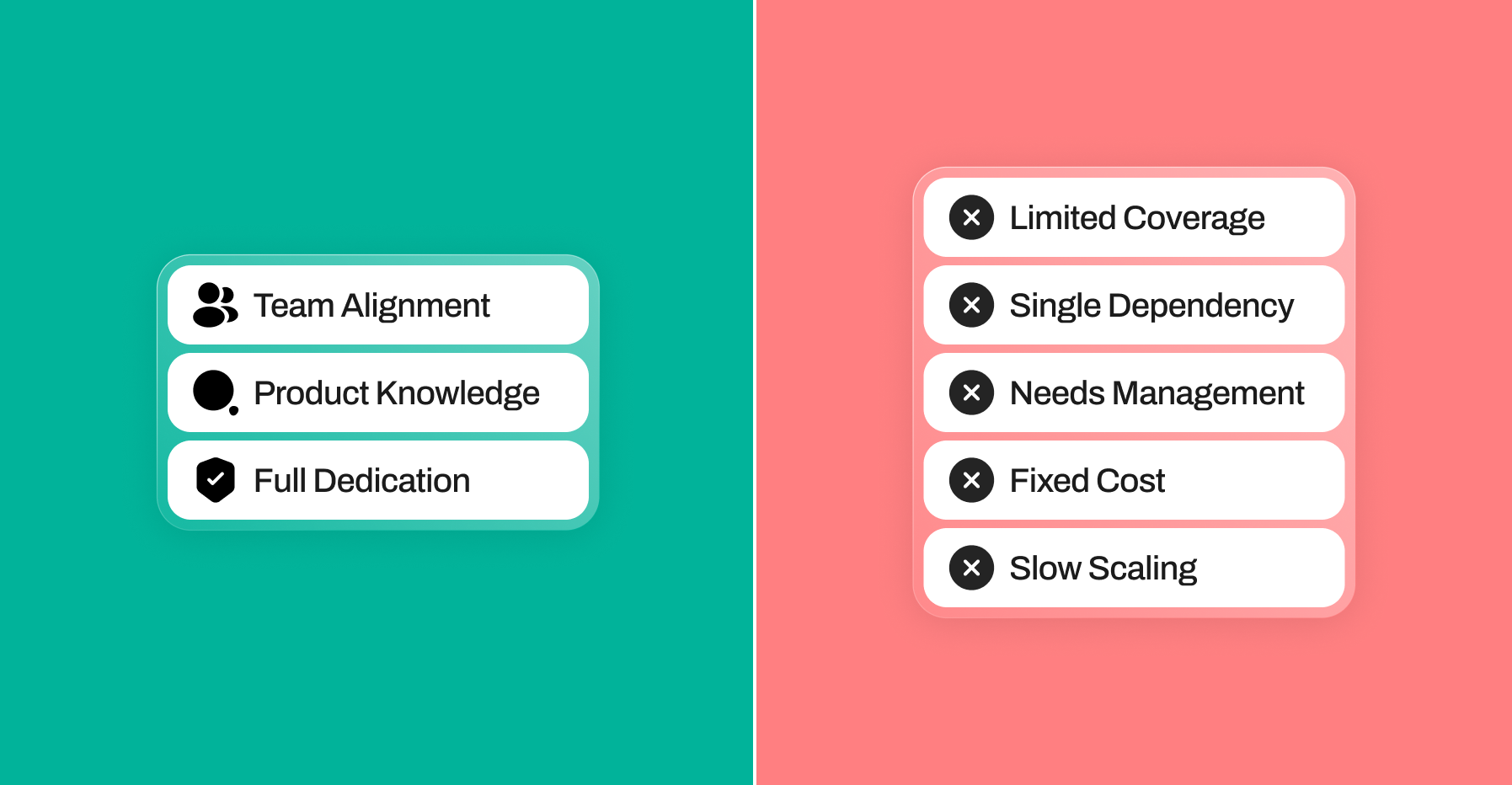
Hiring One In-House Designer: Pros & Limitations
Advantages:
- Strong alignment with internal teams and processes
- Deep understanding of the product over time
- Fully dedicated to your business
Limitations:
- One person cannot cover all areas (UX, UI, research, strategy)
- Quality depends heavily on a single individual’s expertise
- Requires ongoing management and direction
- Fixed cost regardless of workload
- Slower output when design needs grow
The other businesses will have a fractional Head of Design backed by a skilled team working on a flexible, contract basis, offering a pay-as-you-go model with no long-term commitment.
But which option actually helps your business move faster and deliver better results?
Let’s explore both approaches so you can choose the right path for your company.
Why Design Leadership Matters: Without the Management
A good design in the current era is far beyond just a visual treat; it’s a managed process that requires strong leadership, which many businesses struggle to build or oversee internally.
The real challenge isn’t just designing, it’s having the right leadership to manage it without adding internal complexity.
The role of a design leader involves overseeing the complete product design process. Their primary responsibility is to ensure the product meets user needs, solves their problems, and aligns with business objectives.
They help with things like:
- Defining product strategy
- Improving usability and user journeys
- Building scalable design systems
- Aligning design with product and marketing teams
A lot of companies fail to have good design leadership, resulting in inconsistent interfaces, confusing user flows, or products that can't be scaled.
So, the question really becomes, not "who is designing my product," but "how is my design being managed?"

What Is a Fractional Head of Design?
A fractional Head of Design is not just an individual consultant; it’s a complete design function that works as an extension of your team. Instead of hiring and managing in-house designers, you partner with an experienced team that operates as your design leadership while also handling execution.
In this model, you’re not just getting advice; you’re getting a structured design process, guided by senior leadership and supported by specialists across UX and UI design services and product strategy.
For startups, SaaS companies, and growing businesses, this approach removes the need to build and manage an internal design team, while still delivering the same (or higher) level of design quality and consistency.
A fractional design team can support areas such as:
- Product design for SaaS products
- UX research and user journey mapping
- Interface and design systems
- High-converting landing page design
- Ongoing product improvements
But why are more companies choosing this model?
Why Many Businesses Choose a Fractional Design Team
One of the biggest advantages of working with a fractional design partner is that you get an entire team instead of relying on a single hire.
This is why many growing companies choose partners like Peppermint, who act as an embedded Head of Design and a complete GTM design team handling both strategy and execution without the need to build or manage an in-house team.
When you hire a single in-house designer, they’re often expected to handle product design, marketing pages, UX research, UI improvements, and more.
A fractional design team provides a wider range of expertise.
Typically, the team includes:
- Product designers
- UI/UX specialists
- UX researchers
- Design strategists
- Conversion-focused designers
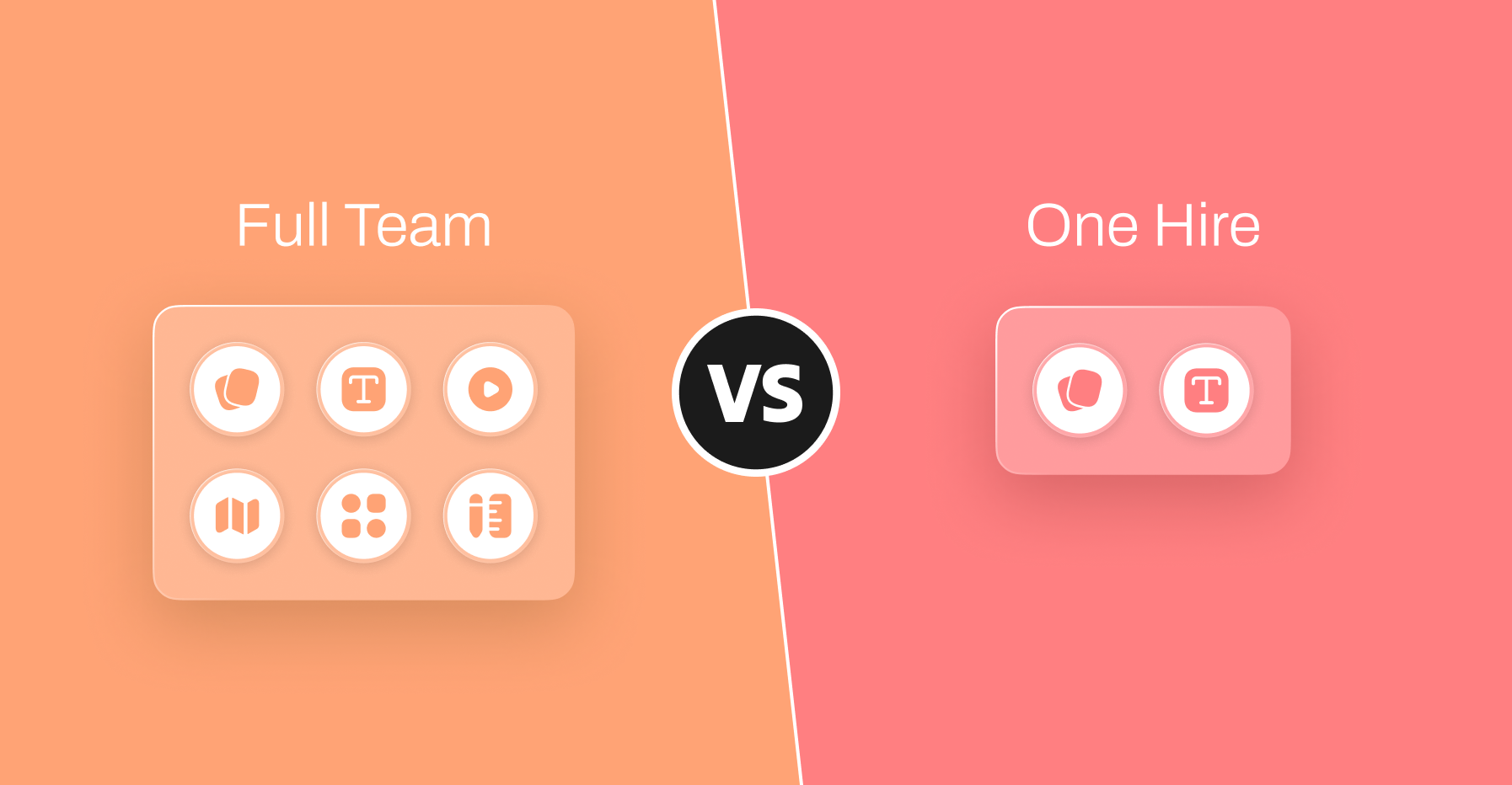
You Get a Full Design Team Instead of One Hire
Hiring one designer rarely covers every design need. A designer might be strong in visual design but less experienced in UX research or SaaS product workflows.
A fractional team gives you access to multiple specialists who work together on the product design process, ensuring each stage is handled by someone with the right expertise.
You Don’t Need to Manage the Team
Leading designers is time-consuming and requires structure and design leadership. Without that experience, businesses can find themselves struggling to lead their internal team of designers.
With a fractional team, there is already leadership in place. A head of design directs the team, approves work, and manages the workload, which frees up your internal team from this burden.
This enables your business to get on with growing the product and leaves the design work to the team.
Quality Control Is Usually Stronger
Experienced design teams follow clear workflows and quality checks.
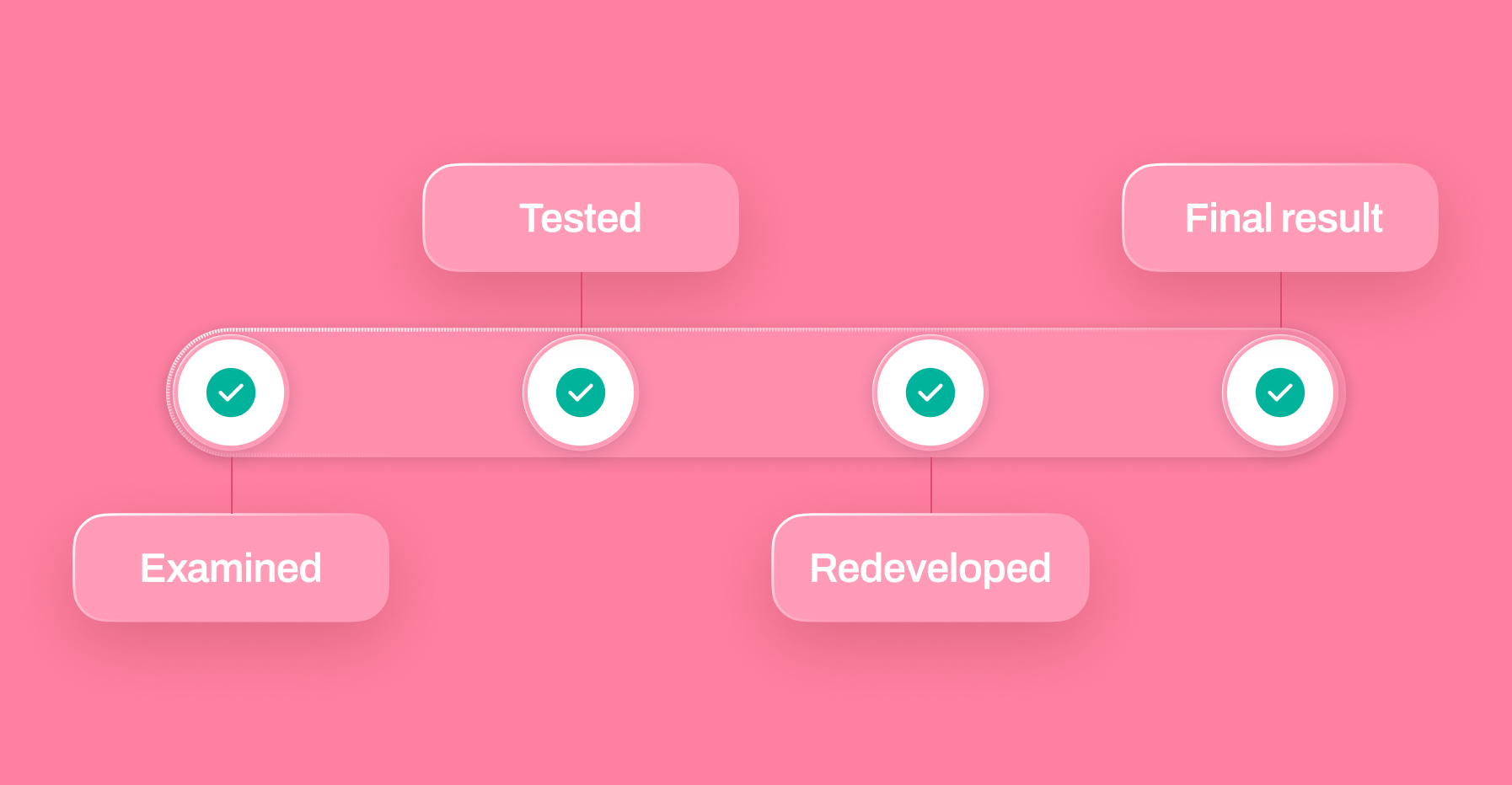
Each stage of the product design process is examined, tested, and redeveloped by the design team until the entire product is well-designed and coherent.
Generally, the product ends up better designed than if it had been developed by the individual designer.
When an In-House Design Team Makes Sense
Although fractional teams offer many benefits, building an internal team can also be the right choice in some situations.
Companies with large product teams or constant design demands often prefer having designers fully embedded in their organization.
An in-house team may work best if:
- Your company already has a large product organization
- Designers need to collaborate daily with developers
- Your design workload is constant and predictable
- You want long-term internal design leadership
For example, large SaaS companies managing multiple products may eventually build internal teams to support ongoing work.
However, building that team requires time, hiring effort, and long-term investment.
Comparing Fractional Design Teams and In-House Hiring
When comparing the two models, flexibility and expertise are often the biggest differences.
Hiring an in-house designer usually involves recruitment, onboarding, and building processes from scratch. If your needs grow, you may need to hire additional specialists later.
A fractional design team works differently. You gain immediate access to experienced professionals who already understand collaboration, workflows, and the product design process.
Another important difference is specialization.
A single designer may be talented but may not have deep experience in areas like product design for SaaS, UX research, or conversion-focused landing page design.
A fractional team combines multiple skills, which often leads to stronger design results across both product and marketing experiences.

How a Fractional Design Team Supports Product Growth
The first few designers a company hires usually work on some relatively small project, such as a few UI screens or an ad campaign.
However, design becomes a much more strategic role and can push product development forward and bring the customer closer.
A strong fractional team can help with:
- Improving product usability
- Designing better dashboards and workflows
- Optimizing user onboarding
- Creating high-performing landing pages
- Strengthening product branding and consistency
The excellent design of the product is more than just to improve the looks of the product. In fact, it helps the users to comprehend the product's value better.
The great design of the product does not merely improve the appearance of the product, but rather enhances the understanding and the worthiness of the product to the users.
Questions Every Business Should Ask Before Hiring Designers
Still wondering which option makes the most sense for your company?
Start by asking a few key questions:
- Do we need one designer or multiple designers with different skills?
- Who will manage and guide the design work internally?
- How quickly do we need results?
- Is our design workload stable or changing?
These questions help clarify whether building an internal team or working with a fractional design partner is the better choice.
For many growing businesses, flexibility and access to expertise make the fractional model especially attractive.
Summing Up
The decision between a fractional Head of Design or an in-house team hinges on your objectives, available resources, and growth phase. In-house teams can be appropriate for established companies that require consistent design output and have internal leadership.
Instead of a single designer, you receive access to a complete design team with specialists available for each step of the product design process, including SaaS product design, professional UI design services, and conversion-optimized landing page design.
Teams like Peppermint follow this model by providing experienced design leadership along with a dedicated team, so businesses don’t have to manage designers themselves while still maintaining strong quality control.
For many companies, this flexible setup makes it easier to move faster, improve user experiences, and build better digital products.
Frequently Asked Questions
What does a fractional Head of Design do?
A fractional Head of Design provides strategic design leadership without being a full-time employee. They guide design strategy, manage the design team, and oversee the product design process.
Is a fractional design team better than hiring one designer?
In many situations, yes. A fractional team gives businesses access to multiple design specialists instead of relying on a single hire, which can lead to stronger results for projects like product design for SaaS.
Can fractional teams provide UI design services?
Yes. Most fractional design teams offer a range of UI design services, including interface design, UX improvements, design systems, and product workflows.
Do fractional teams also design marketing pages?
Absolutely. Many companies work with fractional teams for landing page design, campaign pages, and conversion-focused marketing assets.
When should a company build an in-house design team?
An in-house team works best for companies with large product teams, steady design workloads, and the internal leadership needed to manage and scale the team.