
SaaS Website Design That Makes Products Clear
We study how great SaaS websites and SaaS landing page design reduce friction and convert. Then we build systems as a SaaS website design agency, because your website should reflect how your product works.
The SaaS Website Challenge
SaaS products are different from traditional software. They sell abstraction, automation, and invisible workflows. This means your website must:

Explain unfamiliar concepts clearly so your target audience and potential customers quickly understand what the product does, what problem it solves, and why it matters for their daily work.

Show the product in context using real UI and workflows so visitors immediately see how it fits into daily operations, real use cases, and existing tools they already use.

Demonstrate credibility with proof through real metrics, authentic screenshots, and customer outcomes that show the product working in real environments, not abstract promises.

Guide decision-making through clarity by structuring information logically and highlighting value, helping users compare options, understand tradeoffs, and move forward with confidence.

Reduce cognitive load for scanning with layouts, and focused messaging that helps users grasp value faster, scan content, and stay oriented as they explore the page.
What Defines a High-Performing SaaS Website
We break down great SaaS website design into five core principles shaped by analyzing how top SaaS companies communicate value, structure complexity, and guide users across real product experiences.
Small UI interactions reduce friction and make the interface feel more natural. We add states, easing, and feedback that help users understand what’s happening and what to expect next. These details make controls intuitive and create a sense of smooth flow.
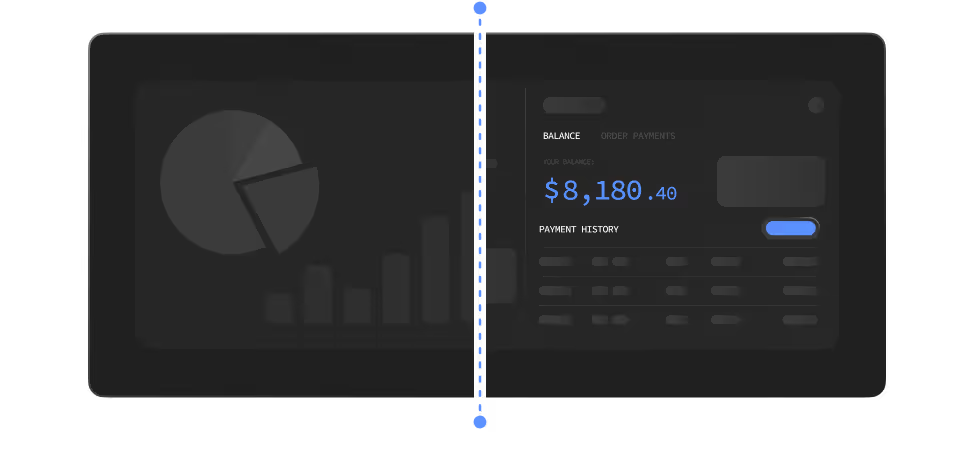
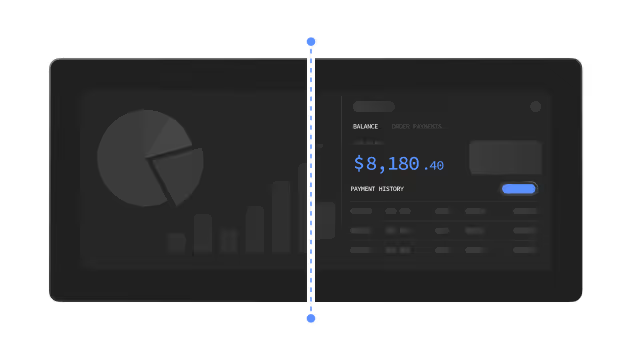
Clear and detailed explainer videos and custom motion graphics that show how your technical product works. We turn architecture into animations that teams understand instantly.
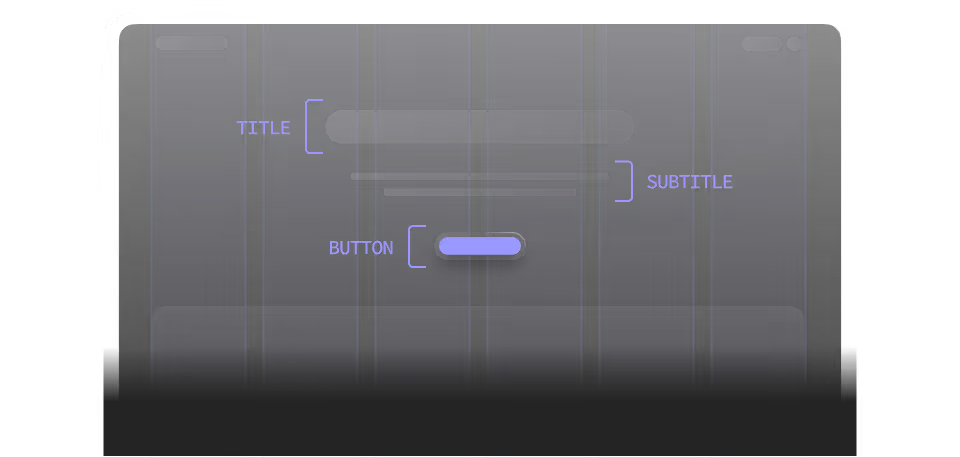
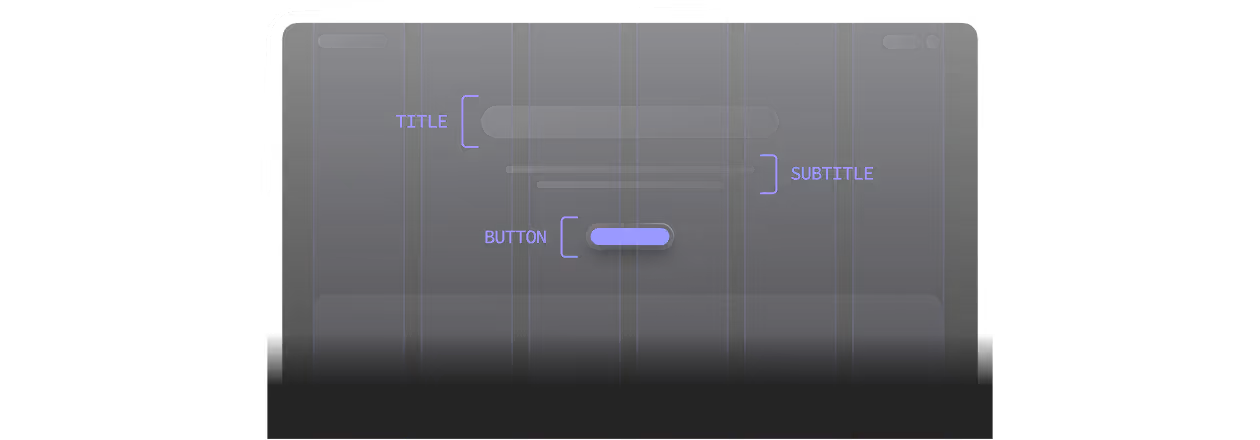
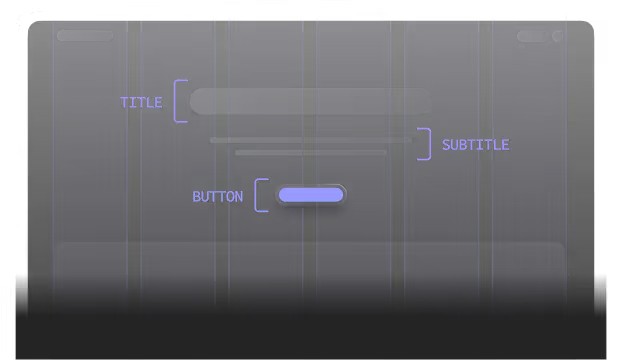
We plan smooth motion for your website. It includes transitions, hero animations, and hints that support reading. Motion highlights the product’s value and keeps users engaged.


We create promotional videos that tell your brand’s story with clarity and style. Each video blends storytelling, motion, and product visuals to highlight how features work in real use — from new product announcements and launch teasers to brand campaigns.
That Reduces Cognitive Load
We restructure features into logical pillars and narratives so the users journey stays clear. This reduces cognitive load and helps reach value sooner through smoother navigation overall across the entire product experience.
Our SaaS Website Expertise
We focus on designing SaaS websites for top saas with speed, clarity, and high quality execution across complex products and platforms. Our approach blends UX patterns, product-first visuals, and structured messaging.
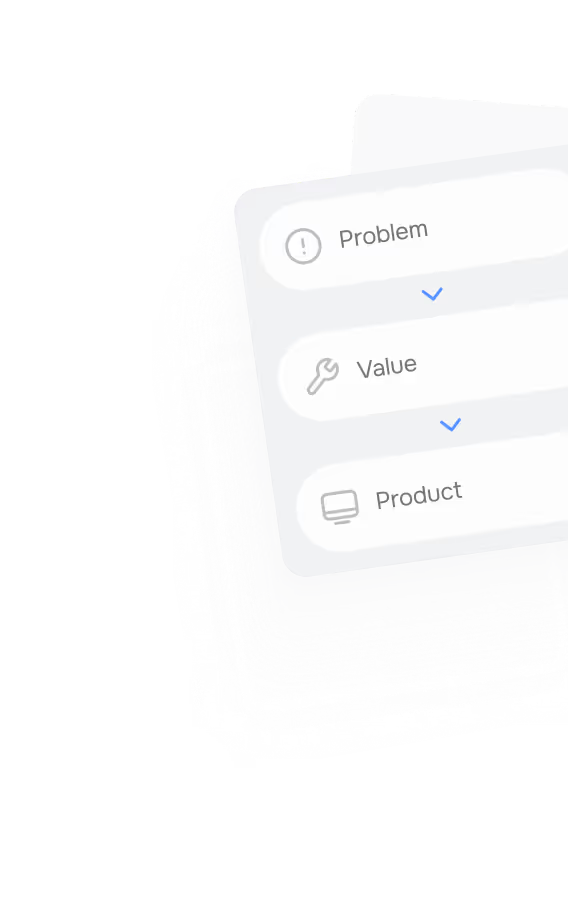
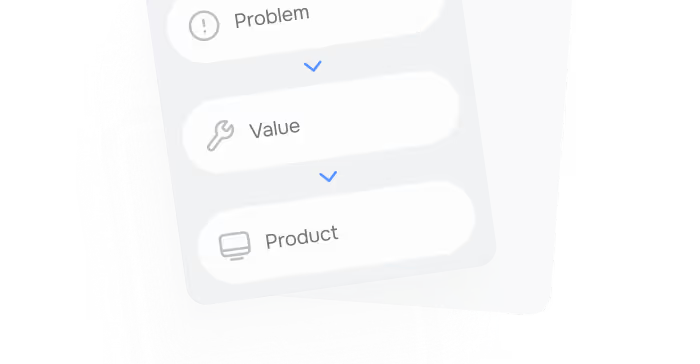
UX Patterns for SaaS
We use proven SaaS patterns that reduce friction:
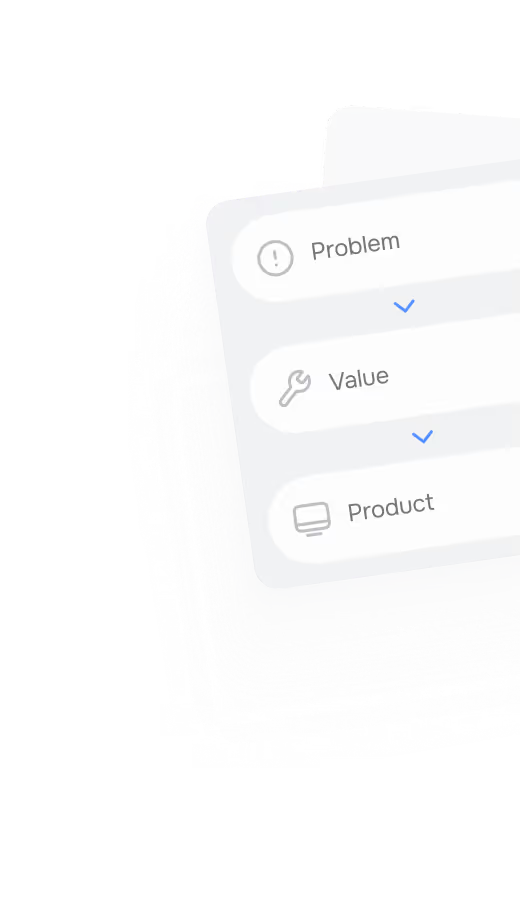
- Problem → value → product flow
- Features grouped by jobs-to-be-done
- Comparison logic
- “Why now?” motivation
- Simplified pricing tables
- Guided CTA pathways
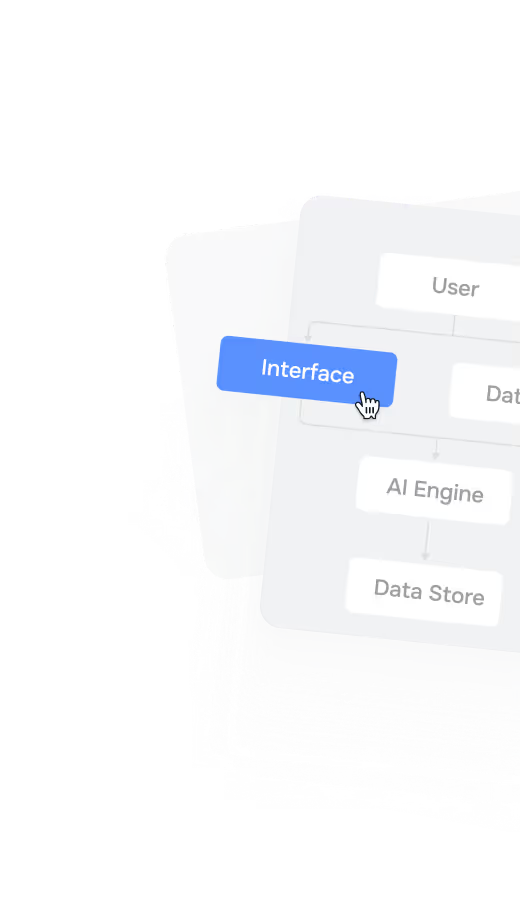
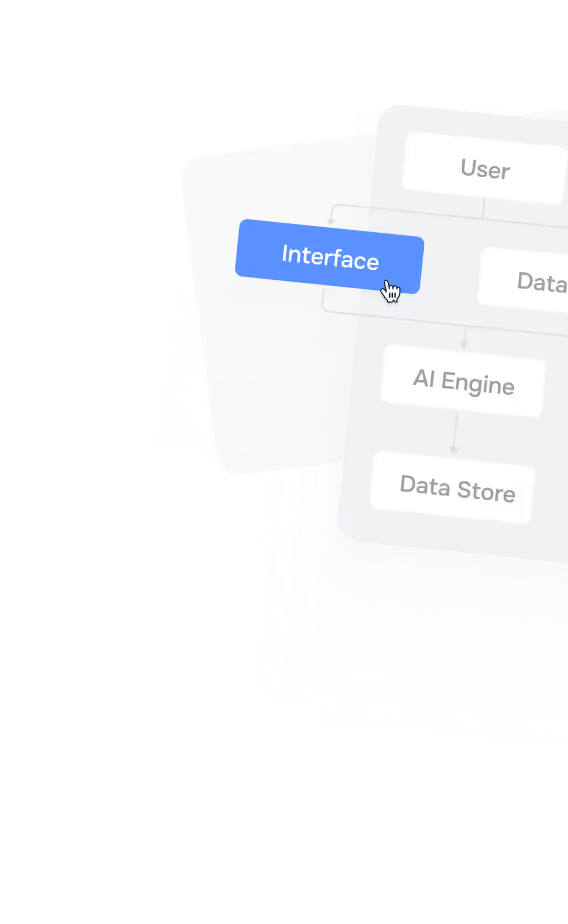
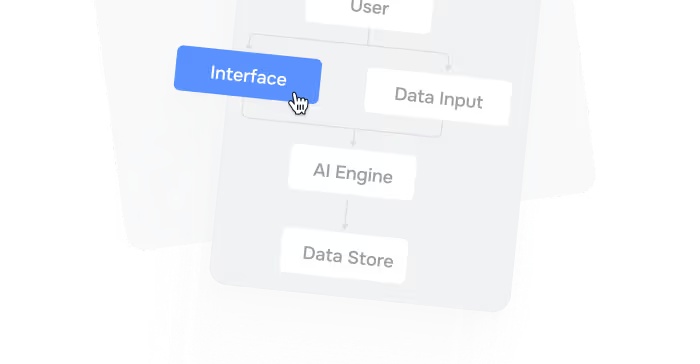
Information Architecture
for Complex Products
AI tools, DevTools, infrastructure platforms — all require deeper structure. We map information into:
- Conceptual layers
- Feature clusters
- Product states
- Learning paths
- Onboarding logic
Product-First Visual Language
SaaS websites must look like the product works. We build a visual system that comes from:
- The UI itself
- It’s constraints
- It’s data
- It’s models
- It’s interactions
Narrative Design for SaaS
Before layout, we define the story:
- What is the core promise?
- What causes friction for your audience?
- What objections must the site resolve?
- What makes your product different in a crowded market?
Let’s Build SaaS Websites That Explain and Convert
Your SaaS website should speak the language of your product clearly, confidently, fast. Let’s build something effective together.
Selected SaaS Website Examples
We follow a clear process that keeps teams aligned at every step. Each phase from research to messaging and design — moves with structure and intent. The result is a fast and predictable workflow.
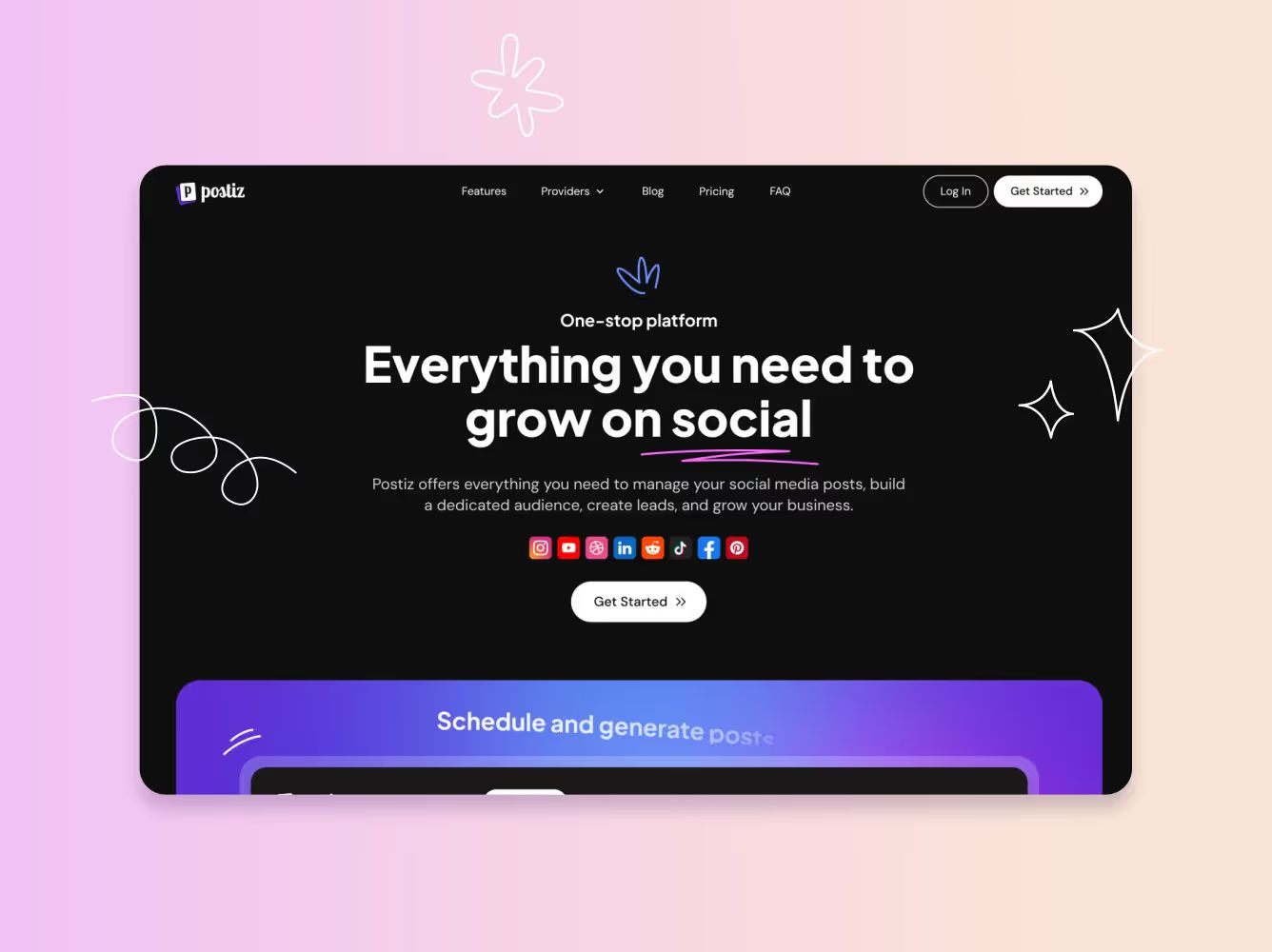
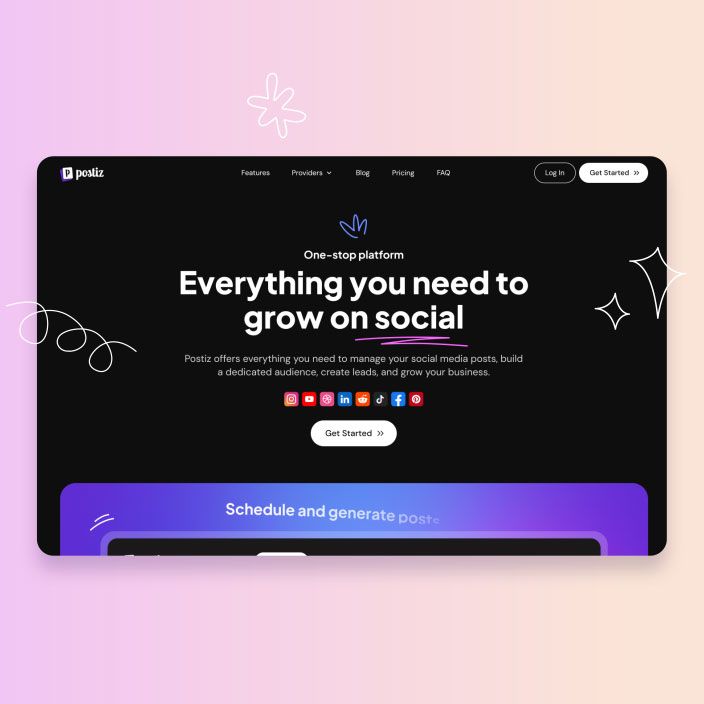

A full redesign with clear architecture, reusable components, and intuitive visuals that improve sign-ups. The new flow highlights scheduling, collaboration, and pricing clarity.
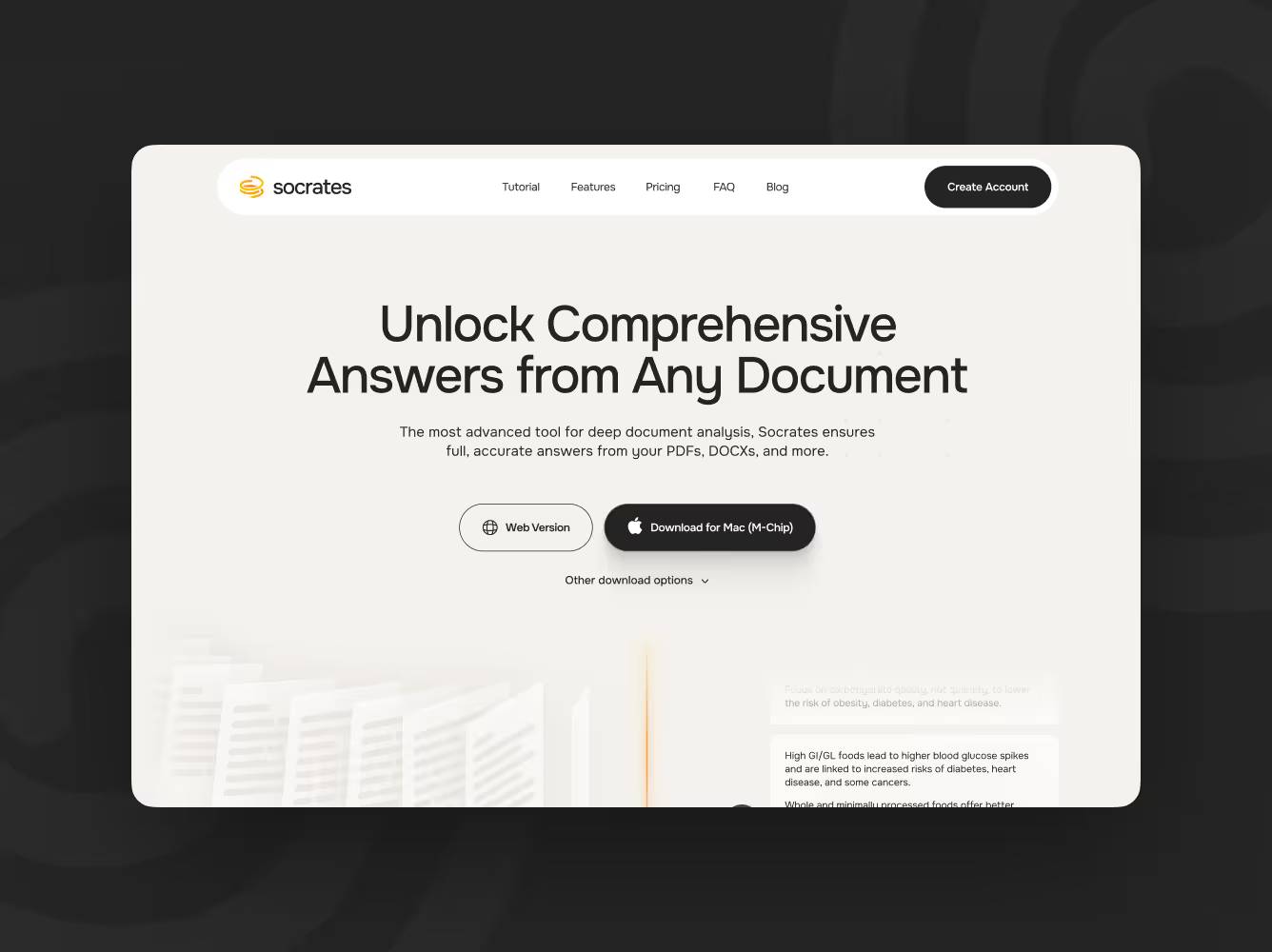
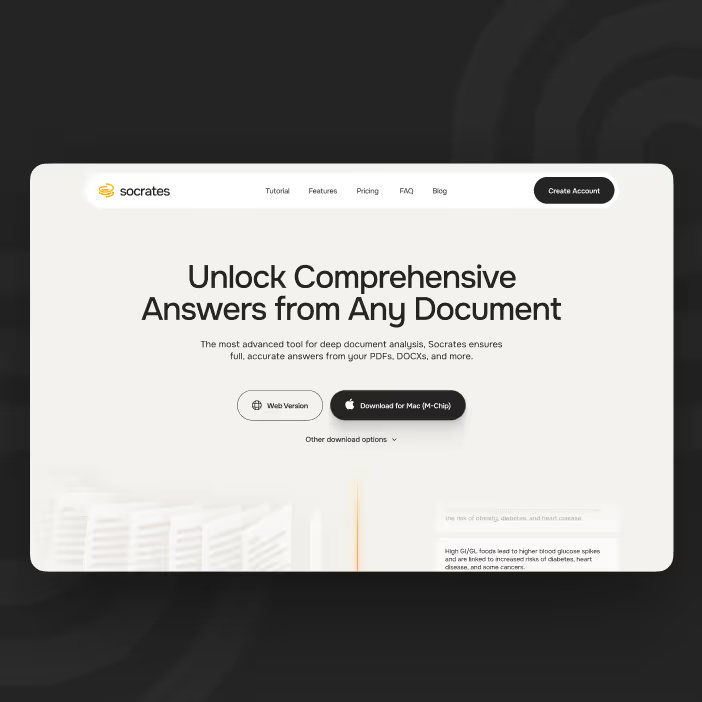

The redesign turned Socrates into a refined AI research product. A cohesive brand, modern UI, and clear site strengthened adoption and credibility.
Frameworks We Use to Evaluate SaaS Websites
We use evaluation frameworks to analyze how clearly, quickly, and effectively a SaaS website communicates product value, supports decision-making, and guides users toward understanding, confidence, and action across key pages.

Can a visitor understand the product’s category and core value within the first 3–5 seconds?

Value Test”
Does the above-the-fold section clearly show what the product does and why it matters?

Compression Test”
Can your feature set be reorganized into 3–5 clear pillars without losing meaning?
How We Work With SaaS Websites
We follow a clear, repeatable process led by a web designer mindset that keeps teams aligned and fast. Each stage from research to delivery is built to connect design decisions with goals. Our approach blends strategy and UX clarity.
We align on audience, use cases, and success metrics through demos, docs, and product usage insights. This helps us understand how users learn, decide, and evaluate your product. The outcome is a clear story foundation and direction for the redesign.
We define positioning, product promise, differentiators, feature pillars, and CTA logic. Each statement is crafted to reduce friction and increase comprehension. This messaging system becomes the backbone of every page we design.
We map your key visitor types — PMs, CTOs, engineers, founders — and their unique goals. For each segment, we design tailored flows that guide them toward clarity and action. This creates a website that adapts naturally to different decision-makers.
We build a cohesive visual system aligned with both marketing and product UI. Components, grids, color schemes, and patterns keep behavior predictable and clean. The result is a unified system that scales across features, pages, and future releases.
We create strong layouts with UI-driven visuals, precise hierarchy, and clear value delivery. Every page emphasizes clarity, readability, and storytelling that feels product-first. The final design is polished, fast to absorb, and optimized for SaaS users.
What You Gain
Our SaaS website process delivers systems that scale. You get production-ready assets and clear guidelines.

Clear product-first visuals that help visitors understand value fast.

Faster time-to-value that helps new visitors see benefits sooner.

A stronger hero section and first impression that builds trust.

A system that naturally evolves and adapts as product roadmap grows.

A website foundation built to support long-term product growth easily.

A scalable structure that improves clarity across features and releases.
FAQs
Everything you need to know about our approach, process, and results.
We work with a wide range of SaaS businesses, from early-stage startups to mature products operating in competitive markets. Most often, these are AI tools, DevTools, B2B platforms, and infrastructure products where the website must explain complex logic clearly to a technical and business target audience. In these cases, clarity and structure matter more than short-term marketing tactics.
Our product design process starts with understanding how the product actually works under real conditions and how different users interact with it. We analyze workflows, user actions, edge cases, and decision paths, then translate them into clear structure and visual logic. This ensures the website reflects the product accurately and speaks clearly to its target audience, rather than acting as a disconnected marketing layer.
Case studies help turn abstract claims into concrete proof. We use case studies to show how real SaaS products are structured, how users interact with them, and what outcomes they enable in practice. This helps potential customers understand real-world usage, builds confidence, and supports credibility through practical examples instead of generic promises, while reducing uncertainty during evaluation and decision-making.
A pricing page should reduce friction, not create it. We design pricing pages with clear comparison logic, simple tiers, and transparent pricing that makes tradeoffs easy to understand. By aligning pricing structure with product value and use cases, we help users make decisions faster and with more confidence.
A pricing page should reduce friction, not create it. We design pricing pages with clear comparison logic, simple tiers, and transparent pricing that makes tradeoffs easy to understand for the target audience. By aligning pricing structure with product value and real use cases, we help users make decisions faster and with more confidence.
High-performing SaaS websites rely on several key elements working together: clear messaging, strong visual hierarchy, real product UI, thoughtful product design, and predictable user flows. These elements reduce cognitive load, guide attention, and help visitors from different segments of the target audience understand value without unnecessary effort, while supporting faster evaluation and confident decision-making.
Transparent pricing helps remove uncertainty and builds trust early in the decision process. When users clearly understand costs, limits, and value, they are more likely to continue exploring the product instead of dropping off. This clarity is especially important for SaaS products with a technical or B2B target audience evaluating adoption.
We design systems, not just pages. By focusing on structure, product design, and clarity, we create websites that scale as the product evolves and the target audience grows or changes. This approach helps SaaS businesses adapt messaging, pricing, and positioning over time without rebuilding the entire website from scratch.